
To Be, or Not to Be:
The Market’s Question
By Brian Broberg | December 5, 2025
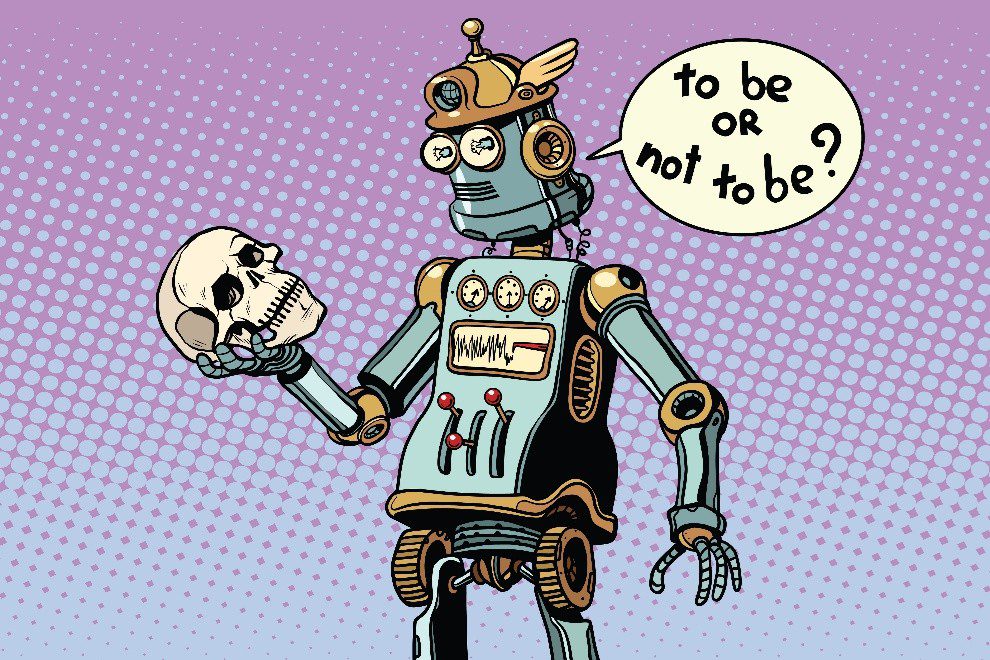
An AI Robot named Hamlet
Hamlet’s soliloquy is an apt metaphor for November’s market volatility. Like Shakespeare’s troubled prince, investors wonder whether it is better to endure the turbulence—especially in the artificial intelligence (AI) sector—or to “end it all” by selling out. The existential question remains: to be invested, or not to be?
A playful rewrite might go like this:
Is AI a bubble, or not a bubble, that is the question:
Whether ’tis nobler in the mind to suffer the slings and arrows of outrageous fortune,
Or to take arms against a sea of troubles by selling,
And by opposing end the constant fears of losing.
Investing has always been a cauldron of fear and greed. Add AI to the mix, and it becomes a witch’s brew. Of course, investing is not life and death like Hamlet’s dilemma—but it can feel that way when headlines scream and portfolios wobble. So, what’s an investor to do?
Take Michael Burry, famous hedge fund manager who profited from the 2008 housing collapse. During the third quarter this year, he placed a “short” position, or bet against, certain AI stocks, claiming they are overvalued. Media outlets painted it as a billion-dollar bet, but Chamath Palihapitiya, venture capitalist, entrepreneur, and former Facebook exec, pointed out on the All-In podcast that the actual exposure was far smaller—about $9 million, since Burry used options rather than outright shorts. Essentially, Burry’s bet was a non-event, compared with the market’s overall size. David Friedberg, entrepreneur, angel investor, and former Google exec added that while valuations look stretched compared to current revenues, they may be justified if you believe AI firms will scale into massive demand over the next decade. In short: skepticism meets optimism, and the truth lies somewhere in between. But how close to the optimistic side?
Look no further than the legendary investor, Warren Buffett. He founded Berkshire Hathaway, and they quietly bought 17.8 million shares of Alphabet, parent of Google, for $4.3 billion in the same quarter. Compared to Burry’s hedge, Buffett’s conviction may be as much as 478 times larger, making Burry’s position meaningless. (Yes, you read that right: 478x!) But you’d never know it by the noise coming from the press. And remember: Buffett doesn’t buy bubbles. His move suggests it’s premature to dismiss AI as a replay of the dot-com crash. Let’s call his choice a “to be” kind of move.
If there is a bubble out there, it’s probably that there is too much talk about bubbles. Perhaps the pundits and click‑baiters are a contrary indicator! Which means this negativity might prove very bullish for the AI sector and the market overall.
So, what’s the takeaway? If you’re going to invest in the AI sector, focus on companies profiting from AI spending—semiconductors, software providers, even biotech firms and big banks. They are all either providing the speed for the technology or harnessing it.
Bottom line: AI is probably not in a bubble, but it will buck like a bronco from time to time. Corrections may last months, but diversification across industries and regions will help you ride through the storm—or, in this case, a seasonal shower.
If Hamlet were here, he would agree—better to endure the slings and arrows than to miss the play entirely.